It's 6:40pm. One of you is holding a phone with a half-scrolled recipe on it, the screen has dimmed twice, and the other one is standing at the open fridge asking whether we already have parmesan. Nobody has actually started anything. Somewhere between "let's cook together tonight" and genuinely cooking together, there's a gap — and most cooking apps were never built to close it.
Search for a couples cooking together app and you'll mostly be handed apps designed for one person: one account, one plan, one phone propped against the kettle while the other human hovers. They're not bad apps. They're just quietly assuming there's a single cook. The moment there are two of you in a kitchen roughly the width of a hallway, a different set of problems shows up — and they're mostly not recipe problems. They're coordination problems.
What "cooking together" actually looks like on a Tuesday
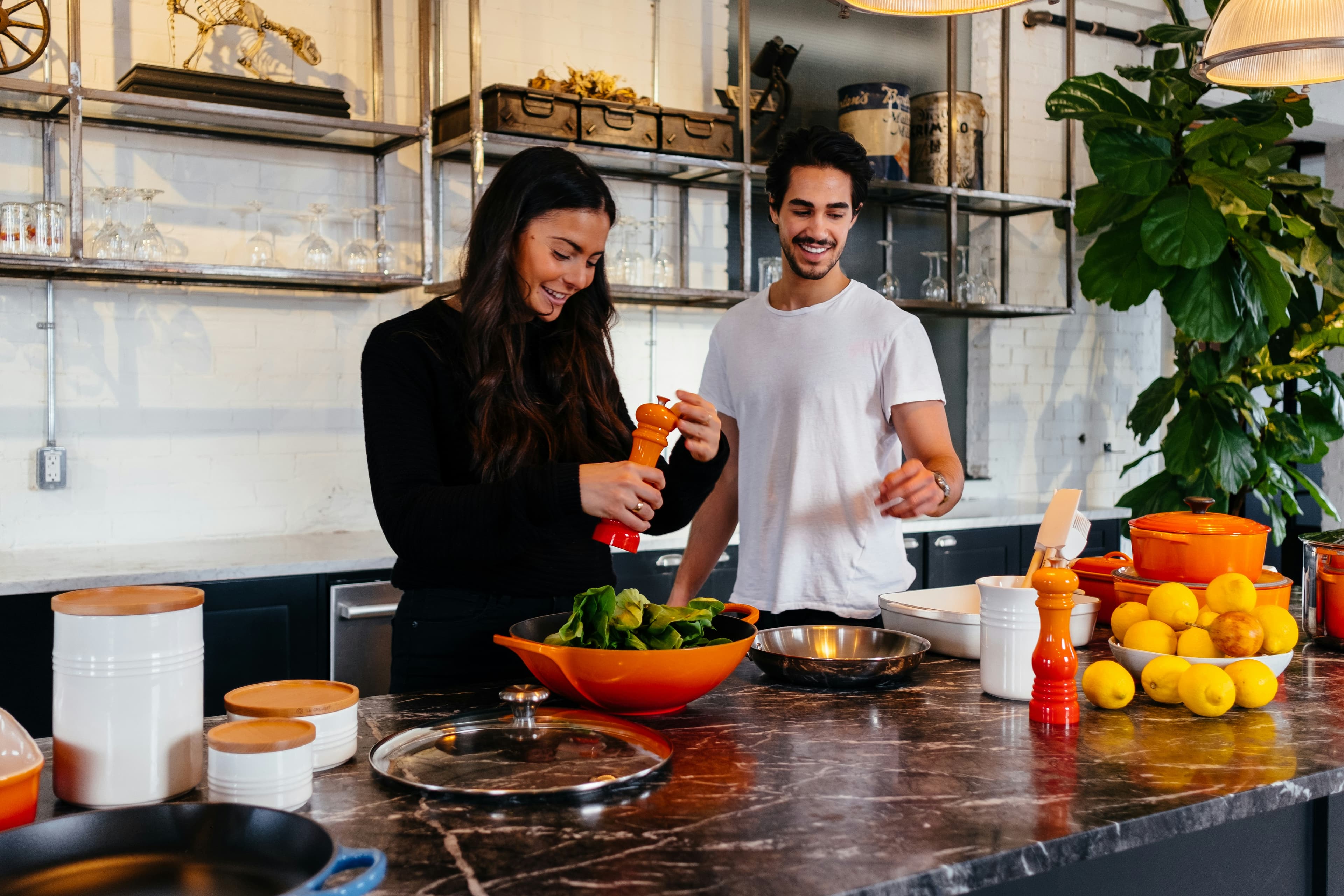
The fantasy version is two glasses of wine and a shared chopping board. The real version is more like this: one of you gets home first and has twenty minutes of unclaimed time. The other one is on the train, mentally scrolling through what's in the fridge. By the time you're both standing in the kitchen, the useful head start has evaporated because neither of you knew what the plan was.
Then the cooking itself starts, and you both end up doing the same job. Two people dicing one onion. Nobody watching the pan. Someone asks "what's next?" four times because only one of you can see the screen. And the actual failure isn't the dinner — the dinner's usually fine — it's that a thing meant to be nice turned into low-grade admin with garlic.
An app aimed at couples has to understand that the work splits across time (before, during, after) and across people, and that those two splits rarely line up neatly. That's the whole design brief.
The solo-app assumptions that quietly fall apart
Most cooking and recipe apps make a handful of reasonable-sounding assumptions that break the second there are two of you. Worth naming them, because once you see them you can't unsee them on an app store listing.
| What a solo app assumes | What two cooks actually do |
|---|---|
| One person saves the recipes | One of you screenshots, the other bookmarks, and neither can find it Thursday |
| One person shops | Whoever passes the shop first goes, often without the list |
| One phone displays the method | Two people need the same step at the same time, hands wet |
| Plans live in one head | Plans have to survive being re-read by the other person at 5pm |
| Portions are "servings: 4" | You want two dinners and maybe one lunch, not four plates |
None of these are exotic edge cases. They're the median Tuesday. We wrote about the planning half of this problem in more depth in meal planning app for two people, but the cooking half — the forty minutes where you're both actually in the room — gets far less attention than it deserves.
The five moments an app has to get right
1. Deciding, without a twenty-minute negotiation
The hardest part of cooking together happens before anyone touches a knife. Deciding is the bottleneck, and it's a bottleneck precisely because there are two opinions. What helps is a shared shortlist you both contributed to earlier in the week, when you were relaxed and not hungry. Deciding from five options you both already liked takes ninety seconds. Deciding from the entire internet takes forever and usually ends in takeaway.
2. Handing off the shopping
Whoever is closest to a shop should be able to open a list that's already right — sorted the way the shop is laid out, with the things the other person added ten minutes ago already on it. If the list lives in one person's notes app, the handoff fails, and you buy a third jar of cumin. Our guide to setting up a shared grocery list walks through the setup that makes this boring in the good way.
3. Starting before the other one arrives
A twenty-minute head start is worth enormous amounts if it's spent on the right things. Prep the aromatics, get water on, marinate the thing that needs marinating. That only works if the early arriver can see the plan without texting to ask. A shared plan turns dead time into the reason dinner lands at 7 instead of 8.
4. Following a method on one screen, together
This is the moment where most apps just sort of give up. You need a big, readable, screen-stays-awake view of the method that both of you can glance at from opposite sides of a bench, with the step you're on obvious at a distance. Nobody should be unlocking a phone with the back of a floury wrist.
5. Remembering what happened
You made it, it was great, one of you said "more chilli next time." That note is worth more than the recipe. If it doesn't get captured in the place the recipe lives, next time you'll make the same slightly-flat version again. A shared library where either of you can scribble on the recipe is how a repertoire builds.
What to actually look for in a couples cooking app
If you're comparing options this week, these are the features that change the experience rather than just decorating it:
- A genuinely shared library — not "share this recipe" as an export, but one collection both accounts own and both can edit.
- Import from anywhere — the blog, the video, the photo of your nan's index card. Whoever finds it should be able to add it in five seconds without retyping.
- A hands-free cooking view — large text, no screen dimming, one step at a time. Small thing, huge daily difference.
- Portion scaling that goes down — most recipes are written for four. Two of you want two, or three if you want lunch.
- A list that merges — two carrots from one recipe plus three from another is five carrots, one line.
- Live sync, not a nightly refresh — the person in the shop needs the item added thirty seconds ago.
- Notes on the recipe itself — the accumulated "we do it this way now" layer.
Notice how few of those are about recipe discovery. There's no shortage of recipes in the world. There's a shortage of shared context.
Three dinners that are genuinely better with two pairs of hands
Some meals are one-person jobs and you should just let one person do them. Others are structurally suited to two cooks — there's a stirring job and a chopping job, or a fast cook and a slow prep, and splitting them turns a chore into something closer to a hobby.
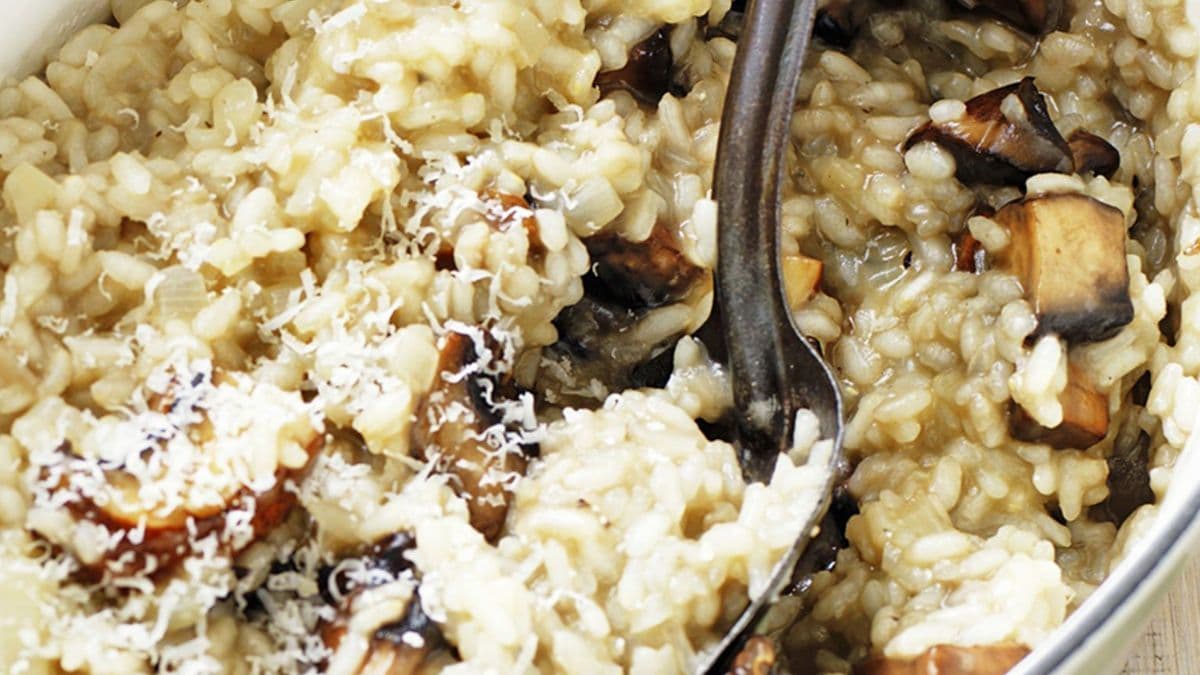
Mushroom risotto is the classic two-cook dinner. One person is tethered to the pan with a ladle for twenty minutes; the other slices mushrooms, grates parmesan, pours the drinks and keeps the conversation going. Solo it's a slog. Together it's genuinely pleasant.
Easy Chinese Beef Stir Fry is the opposite shape: fifteen minutes of prep, four minutes of frantic cooking. One of you preps every bowl while the other reads out the order things go in the wok. Try to do both alone and something burns while you're still slicing spring onions.
And for a weekend where you actually want the cooking to be the evening, Korean-Style Wings with Mixed Veggie, Blue Cheese & Sesame Slaw splits cleanly down the middle — one on wings and sauce, one on slaw. Two jobs, no overlap, no hovering. Turns out too many cooks only spoil the broth when nobody's said who's on broth.
How we think about this at slrp
slrp was built around the two-cook kitchen rather than retrofitted for it, which mostly shows up in unglamorous places. Your recipe library is shared by default — if one of you saves something, it's just there for the other one, no export, no forwarding. Recipes come in from a link, a screenshot or a photo of a handwritten card, so the finding and the saving are the same action. The weekly plan is one plan you both see, so the early-home person knows what to start.
Cook mode is the part couples tell us about most: big type, screen stays on, one step at a time, readable from the other side of the bench. And the grocery list builds itself from the plan, merges duplicates, and updates live — so whoever's in the shop is shopping from the truth, not from a screenshot taken on Sunday.
If your recipes are currently scattered across four apps and a camera roll, the digital recipe book piece covers getting them into one place first. And if the weekly rhythm is the part that keeps slipping, the complete guide to meal planning for couples is the longer read.
A small setup to try this week
You don't need a whole system. Try this for seven days and see what sticks.
- Sunday, ten minutes, both of you. Pick four dinners. Not seven — four. Leave room for the night one of you is late.
- Name the cook for each night. Not who does everything, just who's in charge. Ambiguity is what creates the standing-around.
- Let the list build itself. One shared list, both of you adding to it, whoever passes a shop goes.
- Pick one two-hands dinner. A risotto, a stir fry, something with two clear jobs. Do it on the night you're both home.
- Leave one note. On the recipe, right after eating. "Less stock next time." That's how a repertoire starts.
After a fortnight of that, the 6:40pm fridge-staring mostly stops. Not because you got more organised as people, but because the decisions moved to a calmer moment and the plan stopped living in one person's head.
Common questions
Do we both need our own account?
Yes, and you should want to. Sharing one login means you can't tell who added what, notifications go to one phone, and the list doesn't sync between two people in two places. Two accounts pointed at one shared space is the setup that works.
Is a shared notes app good enough?
For a shopping list, honestly, sometimes. What it can't do is connect the list to the plan or the plan to the recipes, so you end up maintaining three things by hand and one of them is always stale. That gap is exactly where a purpose-built app earns its keep.
What if only one of us actually likes cooking?
That's most couples, and it's fine. The goal isn't forcing a reluctant cook to the stove — it's making the non-cook genuinely useful in ten-minute chunks: doing the shop, prepping the veg, reading out steps. Shared tools make the small contributions possible without a briefing.