Most meal prep guides are written for one person eating six identical chicken-and-rice bowls out of a Tupperware tower. That works if you're a solo gym-goer with a single set of preferences and a tolerance for repetition. It doesn't work for two people who actually want to enjoy what they eat.
Couple meal prep needs a different shape. Two sets of taste preferences. Different schedules — maybe one of you works late on Tuesdays, the other has Thursday dinner with friends. The same dinner reheated five nights running gets old fast when you're sharing it.
The good news: with a slightly different approach, meal prep for two is genuinely easier than meal prep for one. You've got two pairs of hands. You've got someone to taste-test. You've got someone to remind you that you forgot to take the chicken out of the freezer.
Why couples should meal prep differently
The classic meal prep model — Sunday cook-up, six identical containers, eat it all week — has three problems for couples:
- Variety dies fast. What's tolerable when you're eating alone in front of your laptop becomes grim when you're sitting across from your partner who is also eating the exact same lunch for the fourth day running.
- Schedules don't sync. One of you might eat lunch at the office; the other works from home. One might want a hearty dinner; the other wants something light after a workout. Identical containers can't flex.
- Preferences clash. If one of you loves spicy food and the other reaches for milk after a chilli flake, "make six identical portions" is a non-starter.
The fix is a more flexible kind of meal prep. Instead of cooking six finished meals, you prep components — proteins, grains, sauces, roasted vegetables, dressings — and assemble dinners through the week. Same prep effort, infinite variety.
The component approach: prep ingredients, not dinners
Spend two to three hours on Sunday prepping a handful of building blocks. Then assemble dinners through the week in 15 minutes flat.
A typical Sunday prep for a couple might look like:
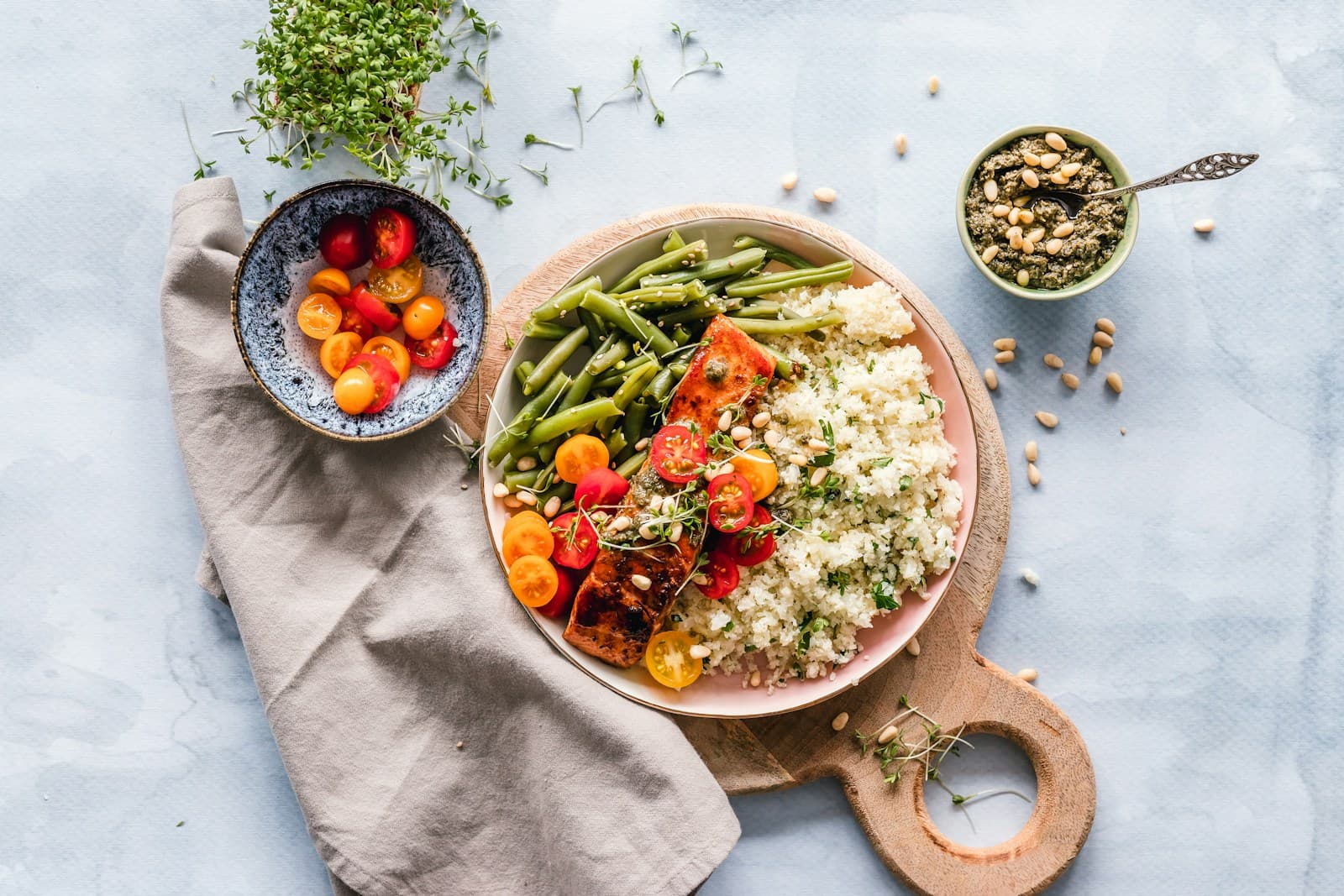
- One protein anchor — a tray of roasted chicken thighs, a slow-cooker beef ragu, or a marinated tofu block. Enough for three to four dinners.
- One grain or starch — a pot of brown rice, a tray of roasted potatoes, or a couscous batch. Reheats well, pairs with anything.
- Two prepped veg trays — roasted (sweet potato, broccoli, capsicum) and raw (chopped salad fixings, washed greens). Keeps things bright through the week.
- One sauce or dressing — tahini-lemon, gochujang-honey, salsa verde, whatever you both like. This is what makes leftovers feel new instead of recycled.
Monday's dinner: chicken + rice + roasted veg + tahini sauce. Tuesday's dinner: chicken + greens + chopped salad + a fried egg. Wednesday's lunch: rice bowl with the same chicken, different sauce, fresh herbs. Same components, three different meals. Neither of you is bored.
How slrp helps you prep as a couple
The hardest part of meal prep isn't the cooking — it's deciding what to cook in the first place. As a couple, that's twice as hard, because you're now negotiating preferences in addition to scrolling for inspiration.
This is where slrp's flexible meal planner shines. Both partners save recipes from any website throughout the week — found something on Instagram on your lunch break? Save it. Spotted a recipe in a magazine? Find it online and save it. By Sunday, you've got a shared library of recipes you've both vetted.
When prep day rolls around, you sit down together and pick three or four recipes for the week. slrp's auto-generated grocery list combines every ingredient across those recipes into one shop-by-aisle list. No cross-referencing three browser tabs. No mystery items.
And because slrp is built for two, both partners can add to the grocery list on the way to the shops — "we're out of eggs", "grab more olive oil" — and check items off in real time as you walk the aisles.
Sunday: the prep itself
The actual cook-up should take two to three hours, ideally with both of you in the kitchen. Some practical rules that make it less of a slog:
- Start the longest-cooking thing first. Roasted potatoes go in before the chicken. Brown rice goes on the stove before you start chopping. By the time the slow-cooked things are done, the quick stuff has already been built around them.
- Split jobs by what each of you actually likes. One of you hates chopping onions; the other doesn't mind. One enjoys cleaning as you go; the other prefers to hammer through the cooking and tidy at the end. Lean into it. (For a deeper dive on dividing kitchen labour, read our piece on how to split cooking responsibilities as a couple.)
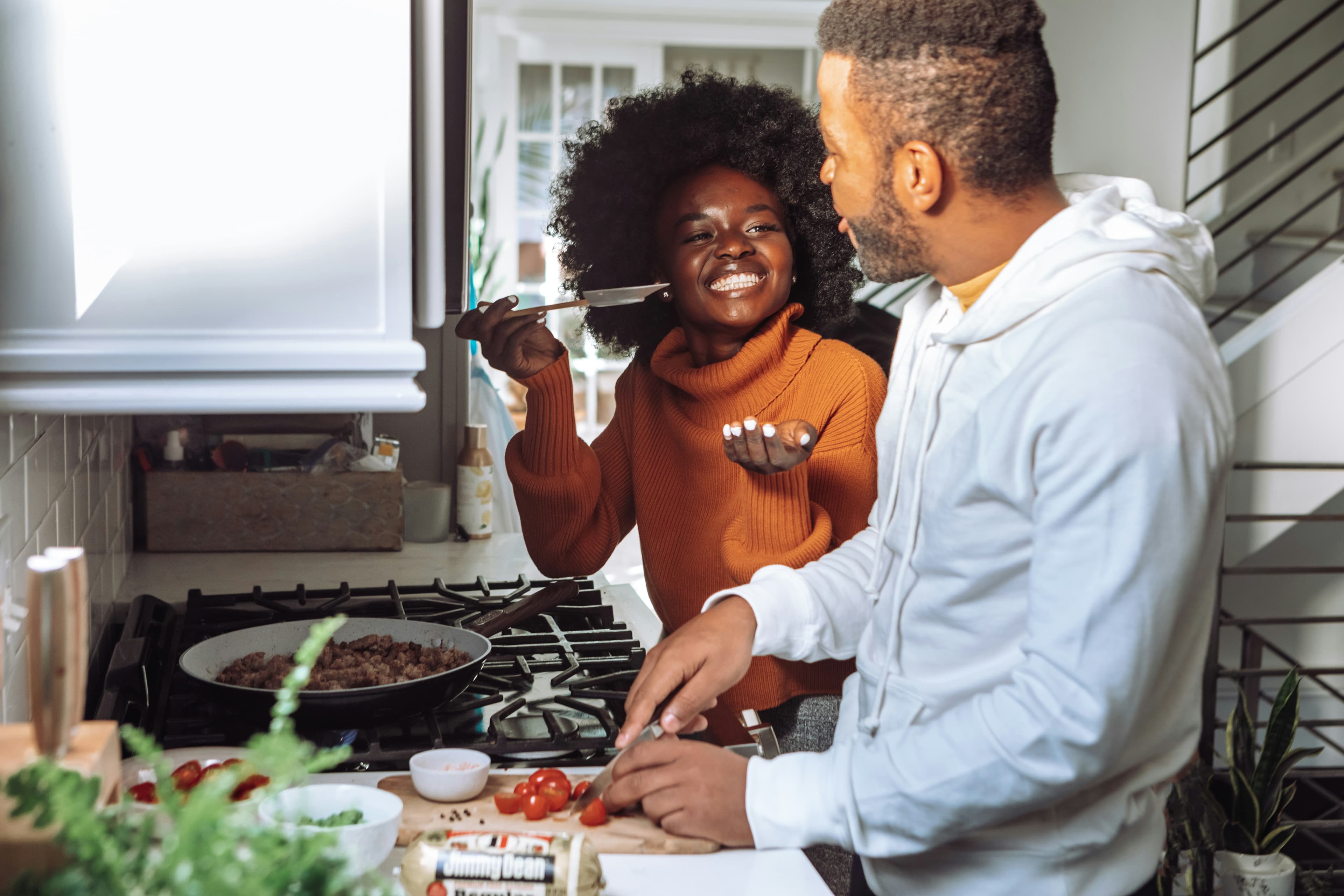
- Put music on, pour something to drink. Sunday meal prep should feel less like admin and more like a date with a side benefit. Make it a thing you look forward to.
- Don't try to prep five days of dinners. Three to four is the sweet spot. Leave two nights of the week for leftovers, takeaway, or "cook something simple from what's left" — otherwise you'll burn out by Wednesday.
Storage: how long does prepped food actually last
The official food-safety line: cooked proteins keep three to four days in the fridge, grains the same. Most fresh-veg sides are best within three days. Dressings and sauces last a week. Anything beyond that, freeze.
Practical implications:
- Eat the highest-risk items (chicken, fish) earliest in the week. Save the more shelf-stable stuff (legumes, hard cheeses, roasted root veg) for later.
- Freeze a portion of whatever you batch-cooked on Sunday. Future-you on a Wednesday in three weeks will be grateful.
- Glass containers beat plastic. They go from fridge to oven to dishwasher without smelling like last week's curry.
The traps to avoid
Common ways meal prep goes wrong for couples:
Over-prepping. If you prep seven dinners and four lunches and the whole pantry's worth of snacks, by Wednesday you'll be sick of every container in the fridge. Three or four meals is plenty.
Ignoring the schedule. If one of you is out for dinner on Thursday, don't prep a meal for two on Thursday. Eat-out nights and leftover nights aren't failures — they're features.
Cooking only what one of you likes. The "I just made what was on sale" partner is doing one half of the couple a favour and the other half a quiet disservice. Both partners' preferences should be in the plan. (If you're navigating different diets entirely, our guide to meal planning when partners have different diets has practical strategies.)
Forgetting to make it enjoyable. If Sunday meal prep becomes a 4-hour grim march through the kitchen, you'll quit within a month. Keep it short, keep music on, keep your standards reasonable.
What about meal prep on a budget?
Meal prep is cheaper than not meal prepping — fewer mid-week takeaways, less food waste, less expensive panic-shopping. But it can drift expensive if you go heavy on premium proteins and out-of-season produce. We've got a whole guide to meal planning for two on a budget with practical strategies — base meals on cheap proteins (eggs, legumes, frozen meat), shop seasonal produce, and use the freezer aggressively.
Putting it together
The whole couple meal-prep loop in five steps:
- Throughout the week: both of you save recipes you'd like to try, in your shared slrp library.
- Friday or Saturday: sit down together and pick 3–4 recipes for next week's meals.
- Saturday: shop using slrp's auto-generated grocery list.
- Sunday afternoon: two to three hours in the kitchen together. Prep components, not finished dinners.
- Monday to Friday: assemble dinners in 15 minutes from your prepped components. Mix and match. Eat takeaway on the night you knew you wouldn't feel like cooking.
The aim isn't to become meal-prep influencers with colour-coded containers and Tupperware towers. It's to take the "what's for dinner?" decision off the table for most of the week, eat better food on weeknights, and spend less money. As a couple, the upside is bigger because you're sharing the load — two people, half the work each, twice the variety.
Ready to try it? Start by saving a few recipes this week, build a meal plan and auto-generated grocery list, and prep your first Sunday. After three weeks it'll feel like the way you've always done it.