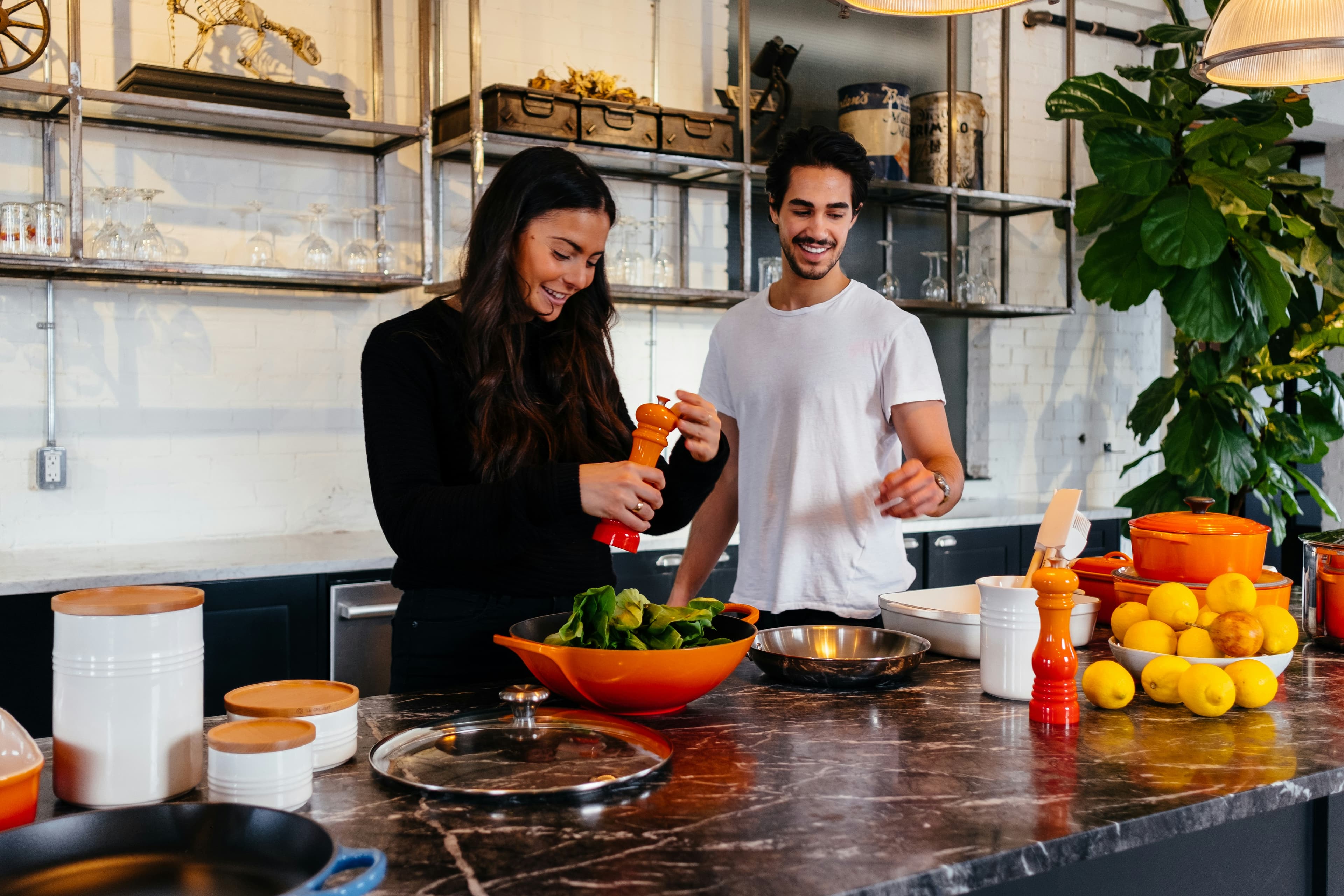
The first six months of married life is when most couples discover that "we'll figure out dinner" is not a meal plan. Two schedules, two food preferences, one fridge, and a wedding-present saucepan you haven't quite worked out — it's the perfect storm for ordering Uber Eats four nights a week and feeling vaguely guilty about it. Meal prep for newlyweds isn't about cooking 14 identical chicken-and-rice bowls on a Sunday. It's about building a small, repeatable rhythm so dinner stops being a daily negotiation.
This guide is for the two of you, not for one person feeding a household. Everything below assumes you cook some nights, eat out some nights, and want the planning to feel like part of the relationship — not a project plan you have to maintain.
Why meal prep looks different when there are two of you
Most meal prep advice was written for solo cooks with predictable schedules. It tells you to batch-cook on Sunday, portion everything into glass containers, and eat the same lunch five days running. That works if you're optimising for one stomach and one calendar. It does not work for newlyweds.
For couples, the variables multiply. One of you has a Tuesday work dinner. The other has a Thursday gym night. One wants more vegetables; the other thinks "salad" is a side dish, not a main. You probably don't want to eat identical lunches because you're sharing them at home, not eating them alone at a desk. And neither of you wants to cook a full dinner on a night when you've barely seen each other.
The meal-prep approach that actually fits is closer to flexible rotation than batch cooking. You plan a small set of meals you both like, you shop for them once a week, and you accept that the plan will shift mid-week. That's not a failure — that's the design.
Start with the question, not the calendar
Most planning advice tells you to start with a blank weekly calendar. Don't. Start with the question that ruins more weeknights than any other: "what's for dinner?" If you can answer that question on Sunday evening for the seven nights ahead — even loosely — you have removed roughly 80% of the decision fatigue from your week.
The trick is the answer doesn't need to be a fixed recipe slotted into a fixed day. It can be a shape. Like:
- Monday — something quick from the freezer
- Tuesday — the new recipe one of you wants to try
- Wednesday — leftovers from Tuesday
- Thursday — easy traybake
- Friday — takeaway, no guilt
- Saturday — cook together, take your time
- Sunday — eggs on toast and a movie
That's not rigid meal prep. That's a frame. Inside the frame you decide on the actual dishes, but the shape stops the "what's for dinner?" debate cold. We wrote a longer piece on how to break the what's-for-dinner loop if you want to dig into the psychology of it, but the short version is: a vague plan beats no plan, every time.
The four-recipe rotation that won't break you
If you want a starting point — and most newlyweds do — pick four recipes you both genuinely like and rotate them over a fortnight. Four is the magic number: enough variety that you don't get bored, few enough that you can actually remember the ingredients and ad-lib them by week three.
A good newlywed rotation looks like this: one quick weeknight chicken, one one-pan or traybake dish, one pasta or grain bowl, one slightly-fancier "we have time tonight" recipe. Here's an example set you could lift straight off this page:
- Weeknight chicken: RecipeTin Eats' lime-marinated grilled chicken — 15 minutes from fridge to plate, serves four (so you've got tomorrow's lunch built in).
- Traybake: lemon garlic salmon tray bake — one pan, 21 minutes, and the cleanup is roughly nothing.
- One-pot: NYT Cooking's one-pot chicken and lentils — Sunday-cooks-once, Wednesday's-lunch-sorted vibe.
- Slow night: something you both like cooking together — pizza from scratch, hand-rolled gnocchi, a slow ragu. It doesn't need to be on rotation every week; just have one in your back pocket.
Once you've cooked each recipe twice, you've effectively memorised them. The grocery list shortens every week because the staples — olive oil, lemons, garlic, a couple of proteins, a couple of grains — are already in your kitchen. By month three you're not following recipes; you're improvising around them.
How to split the kitchen work without arguing
This is the part most meal-prep guides ignore, and it's the part that ends up causing the most friction. If one of you is doing the planning, the shopping, the cooking, and the cleaning, you don't have a meal-prep system — you have a job, and an unhappy half of a marriage.
The cleanest split for most couples is: one person plans, the other shops; one person cooks, the other cleans. Rotate weekly. The shopper doesn't get to second-guess the planner's list, and the cleaner doesn't get to comment on the cook's pan choice. You can swap who does what whenever you like, but on any given week, the roles are clear.
This isn't gendered, and it isn't fixed. It's about removing the moment-by-moment negotiation. We dug into this more in how to split cooking responsibilities as a couple, but the headline is: the worst combination is when both of you think you're "helping" the other one. Get explicit about roles and the resentment evaporates.
One grocery list, two phones
The single biggest unforced error newlyweds make with meal prep is keeping two separate grocery lists — a Notes app on each phone, an Instagram screenshot here, a "did you get garlic?" text there. By the time you're at the supermarket, neither of you knows what the other already bought.
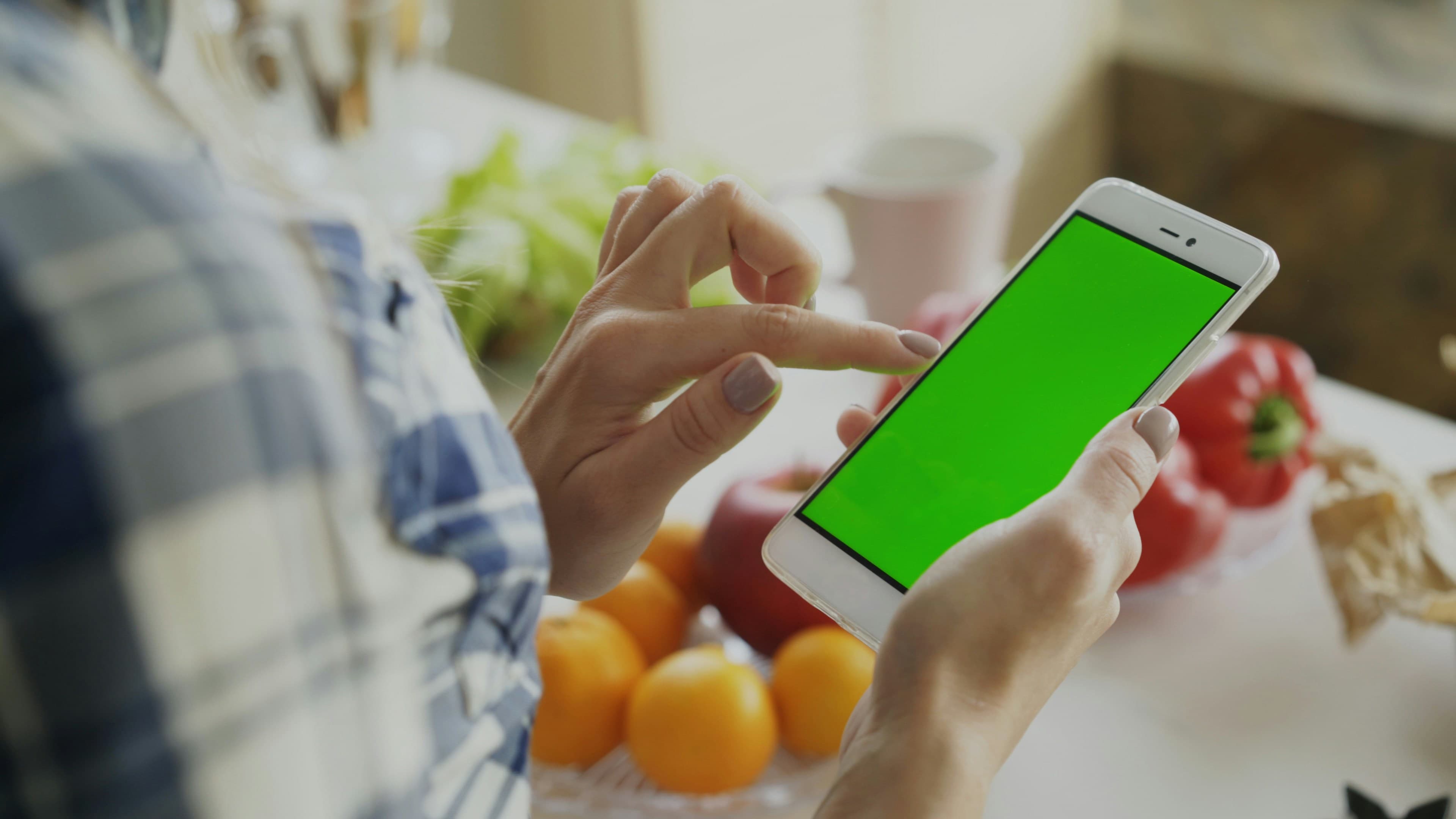
Get on one shared list. Doesn't matter what app — AnyList, Google Keep, slrp, the back of an envelope you both keep on the fridge. The format matters less than the principle: there's one list, both of you can add to it, and both of you can see what's already on it. When something runs out (the soy sauce, the bin liners, the last egg), whoever notices puts it on the list. By Friday, the list writes itself.
If you want the list to literally write itself, that's what slrp does — you paste the recipes you want to cook this week into the app, and it auto-generates a smart grocery list grouped by aisle, deduped across recipes, and shared with your partner in real time. We explained the mechanics in how to auto-generate a grocery list from your meal plan. Whatever tool you use, the shared-by-default principle is the load-bearing piece.
Build a pantry that does the work for you
A well-stocked pantry is what separates "we'll figure out dinner" from "we'll figure out dinner in 20 minutes." Newlyweds tend to under-stock for the first year because they're moving in together and the kitchen still feels like someone else's. Push through that. A small set of staples turns almost any protein-plus-veg into a meal.
The newlywed pantry we recommend: olive oil, a neutral oil, soy sauce, fish sauce, balsamic vinegar, lemon juice, garlic, dried chilli flakes, salt and pepper, dried pasta in two shapes, basmati rice, tinned tomatoes, tinned chickpeas, tinned coconut milk, stock cubes or paste, honey or maple syrup, butter, parmesan, dijon mustard. That's it. About $90 to fully stock the first time; after that, you replace one or two things a fortnight.
The win isn't the pantry itself — it's that with these on hand, almost any random protein and almost any random vegetable becomes dinner. Run out of a recipe ingredient? You can usually swap. Get home tired and the planned recipe feels impossible? You can pivot. The pantry is the safety net under the plan.
Eating well for two without doubling the cost
Newlyweds often assume that two people eating well at home costs roughly double what one person costs. It doesn't. Two-person cooking is more cost-efficient per meal than solo — you're using a single pan, a single oven heat-up, a single trip to the shops. The thing that blows the budget isn't the food; it's the takeaway substitutions when the plan falls apart.
If you're feeling the squeeze of newlywed expenses (wedding hangover, deposit-saving, a holiday you both want), we wrote a whole piece on meal planning for two on a budget with concrete tips that don't involve eating rice and beans every night. The shortest version: buy proteins in larger packs and freeze in dinner-sized portions, use eggs and tinned fish liberally, and accept that "fancy" doesn't have to mean "weeknight."
What to skip in your first year
Most meal-prep advice tries to sell you on systems that work for influencers, not for two real people cooking in a small kitchen. A short list of things you do not need to do in year one:
- Sunday batch-cooking 14 lunches. You will get sick of them by Wednesday and quietly resent each other.
- Buying a vacuum sealer. A roll of cling wrap and a freezer bag cover 95% of cases.
- Macro-tracking every meal. Unless one of you has a specific dietary goal, this kills the joy of cooking together faster than anything else.
- Subscribing to a meal kit service. They're a fine training-wheel for the first month if neither of you cooks, but they don't teach you to plan — they teach you to follow instructions. Different skill.
- Sticking to a rigid 7-day calendar. Life moves. Your plan needs to move with it. Anyone who tells you Monday is "stir-fry night" forever has never been married.
The thing nobody tells you
Meal prep, properly done, is the most surprisingly bonding daily ritual in a marriage. It's not the cooking itself — it's the planning, the shopping, the small decisions made together about what to eat this week and who's doing what. Couples who plan together fight less about food, eat better, and spend less. The cliché about a couple that cooks together stays together has more truth in it than the cynical version of you wants to admit.
The first year is when you set the rhythm. Pick a simple system, agree on roles, share the grocery list, stock the pantry, and forgive yourselves on Friday for ordering pizza. Six months in, you'll look back and wonder why you were so anxious about it. If you want the full structured walkthrough, our complete guide to meal planning for couples is the long version of this post — same philosophy, more detail.
And if you want a tool that already knows how to do all of this — shared library, one meal plan, one grocery list, both phones — that's exactly what slrp is built for. Two cooks, one kitchen, no spreadsheets.