She's vegetarian. He wants steak. She's gluten-free. He'd eat pasta every night if you let him. Sound like your household?
When partners have different dietary needs or preferences, meal planning can feel impossible. The easy solution — cooking two completely separate dinners — is exhausting, expensive, and defeats the whole point of eating together. The actual solution is smarter than that.
The "base recipe" strategy
The single best technique for mixed-diet couples: cook a base recipe that works for both of you, then customise at the end.
Think about it — most meals have a base (grains, vegetables, sauce) and a protein. If you cook the base together and handle the protein separately, you're doing maybe 10 minutes of extra work instead of cooking two entire meals.
Examples that work brilliantly:
- Stir-fry: cook the vegetables and rice together, add tofu to one portion and chicken to the other
- Tacos: shared toppings (salsa, guac, cheese, lettuce), separate fillings (black beans vs. seasoned beef)
- Curry: make the sauce and rice together, add chickpeas to one pot and prawns to the other
- Pasta: shared sauce, use regular pasta for one and gluten-free for the other
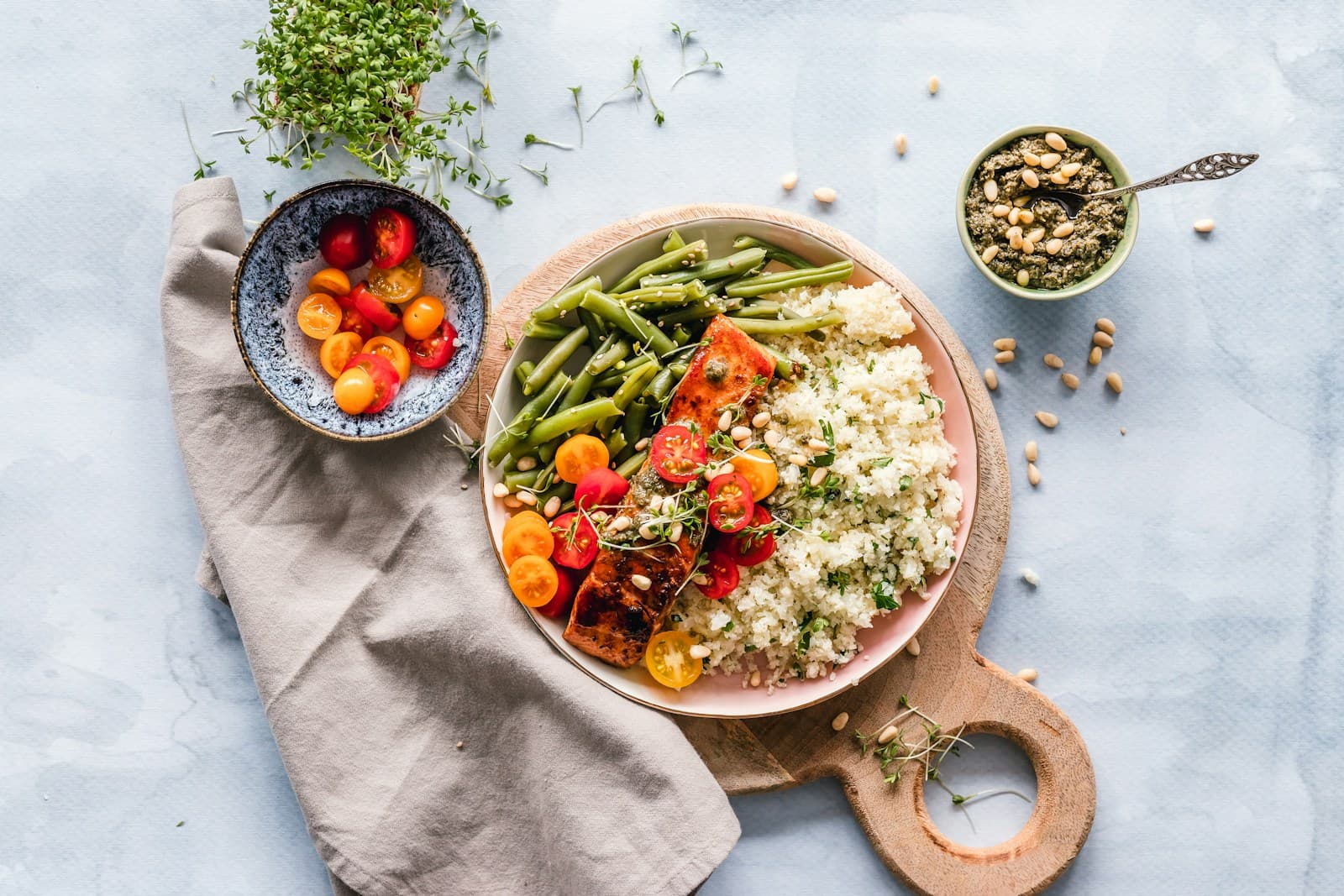
- Buddha bowls: same grain base and veggies, different proteins on top
The key is that you're still cooking together — same kitchen, same time, mostly the same food. You're just customising the last 20% rather than cooking two separate meals from scratch.
Find your "compromise meals"
Every couple with different diets has them: meals you both genuinely enjoy, no modifications needed. Maybe it's mushroom risotto, or vegetable pad thai, or a really good margherita pizza.
Make a list. Seriously — sit down together and write out every meal you both love without needing to change anything. Most couples can find at least 5-10 of these. Those are your go-to recipes for busy weeknights when you don't have the energy for customisation.
Save these into your shared recipe library so you can pull them into any weekly meal plan without thinking twice.
The weekly mix
Here's a realistic weekly split that works for most mixed-diet couples:
- 2-3 nights: Compromise meals you both love as-is
- 2-3 nights: Base recipes with protein swaps
- 1-2 nights: Leftovers, takeaway, or each-to-their-own nights
This means you're cooking one meal together most nights, with minimal customisation. Nobody feels like their diet is being ignored, and nobody's exhausted from running two separate kitchens.
Tips that actually help
- Stock both proteins: keep a rotation of each partner's preferred proteins in the freezer so you're always ready for a quick swap
- Batch your swaps: if you're grilling chicken for one partner, grill enough for two nights. Same with tofu or tempeh for the other
- Don't keep score: some weeks will lean more toward one partner's preferences. That's fine. Over time, it balances out
- Try each other's food: once a month, the meat-eater tries a fully vegetarian week, or the gluten-free partner picks a recipe they'd normally skip. You might be surprised
Let your meal plan do the thinking
When you're juggling different diets, a shared meal plan is even more valuable. Instead of negotiating every night, you've already agreed on what you're eating this week — including who's getting which version.
slrp makes this easier because you both have access to the same recipe library. You can each save recipes that work for your diet, and when planning time comes, you're picking from a shared collection that already accounts for both your needs. Then your grocery list generates automatically with ingredients for both versions.
For the full picture, read our complete guide to meal planning for couples. And if you're trying to keep things affordable while managing two sets of dietary needs, check out our tips for meal planning for two on a budget.
Different diets don't have to mean different dinners. With a bit of planning and a lot of good tacos, you two can make it work.