"AI grocery list" is one of those phrases that could mean almost anything. Sometimes it means a chatbot that writes you a list of things a person might buy. Sometimes it means a tickbox app with a clever autocomplete. And sometimes it means something genuinely useful: software that reads the actual recipes you're cooking this week and turns them into the actual shop you need to do.
That third one is worth understanding properly, because the hard part isn't the list. Anyone can write a list. The hard part is everything between "these are the four recipes we're cooking" and "this is what to buy" — and that gap is messier than it looks. Here's what's actually happening in there, what AI is genuinely good at, and where it still gets things wrong.
The problem isn't writing a list. It's reading recipes.
Open any recipe and look at how the ingredients are written. Not the tidy version in your head — the real one:
- "2 cloves of garlic, finely chopped"
- "1 large brown onion, diced"
- "a good handful of flat-leaf parsley"
- "400g tin chopped tomatoes"
- "olive oil, for frying"
A human reads that and knows instantly: buy garlic, buy an onion, buy parsley, buy a tin of tomatoes, and you've already got olive oil. But every one of those lines is a different shape. Some have a quantity and a unit, some have a vague quantity, some have preparation instructions baked in, and one isn't really a shopping item at all.
Turning that into a shopping list means pulling each line apart into its pieces — how much, what unit, what the thing actually is, how it's prepared, and whether it's essential or optional. That's the job. Everything downstream depends on getting it right, and it's the part that plain automation has always been bad at, because recipe writers don't follow a format.
Merging four recipes into one shop
Once each ingredient is broken into pieces, the next problem appears: you're not shopping for one recipe, you're shopping for the week.
Three of your four recipes want onions. One wants "1 large brown onion", another "2 small onions, sliced", a third "½ cup diced onion". A list that just concatenates recipes gives you three separate onion lines and a slightly stupid trip to the supermarket. What you want is one line that says how many onions to buy.
Getting there means recognising that all three are the same product despite being written differently — and that's not simple string matching. "Spring onion", "shallot" and "scallion" may or may not be the same thing depending on where the recipe was written. "Coriander" is the leaf here and the seed in the US. Good merging has to understand the food, not just the text.
Units that refuse to agree
Then there's the arithmetic, which is only easy when the units match. Real weeks give you "½ cup", "4 tablespoons" and "100ml" of the same thing across three recipes, and the answer you want on the list is a single sensible number — not three fractions you're expected to add up in the dairy aisle.
Some of this is straightforward conversion. Some of it isn't: a cup of flour and a cup of spinach are wildly different in weight, and "2 cloves" doesn't convert into anything you can buy — you buy a bulb. The useful behaviour is knowing when to add quantities up, when to convert, and when to stop being clever and just say "garlic".
Sorting by aisle, not by recipe
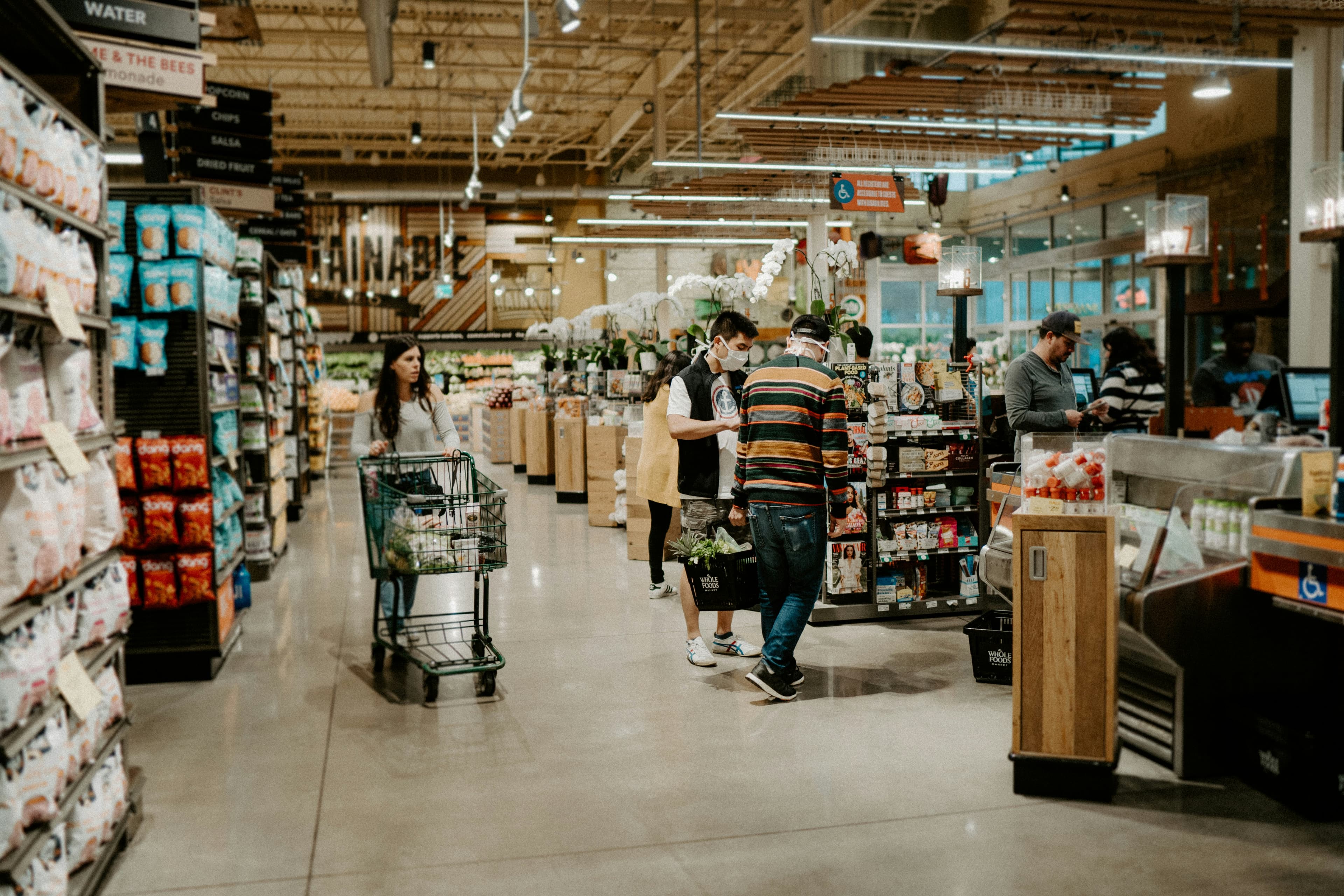
A list in recipe order makes you walk the supermarket like a maze — produce, dairy, back to produce, tinned goods, back to dairy. A list in aisle order is a single lap.
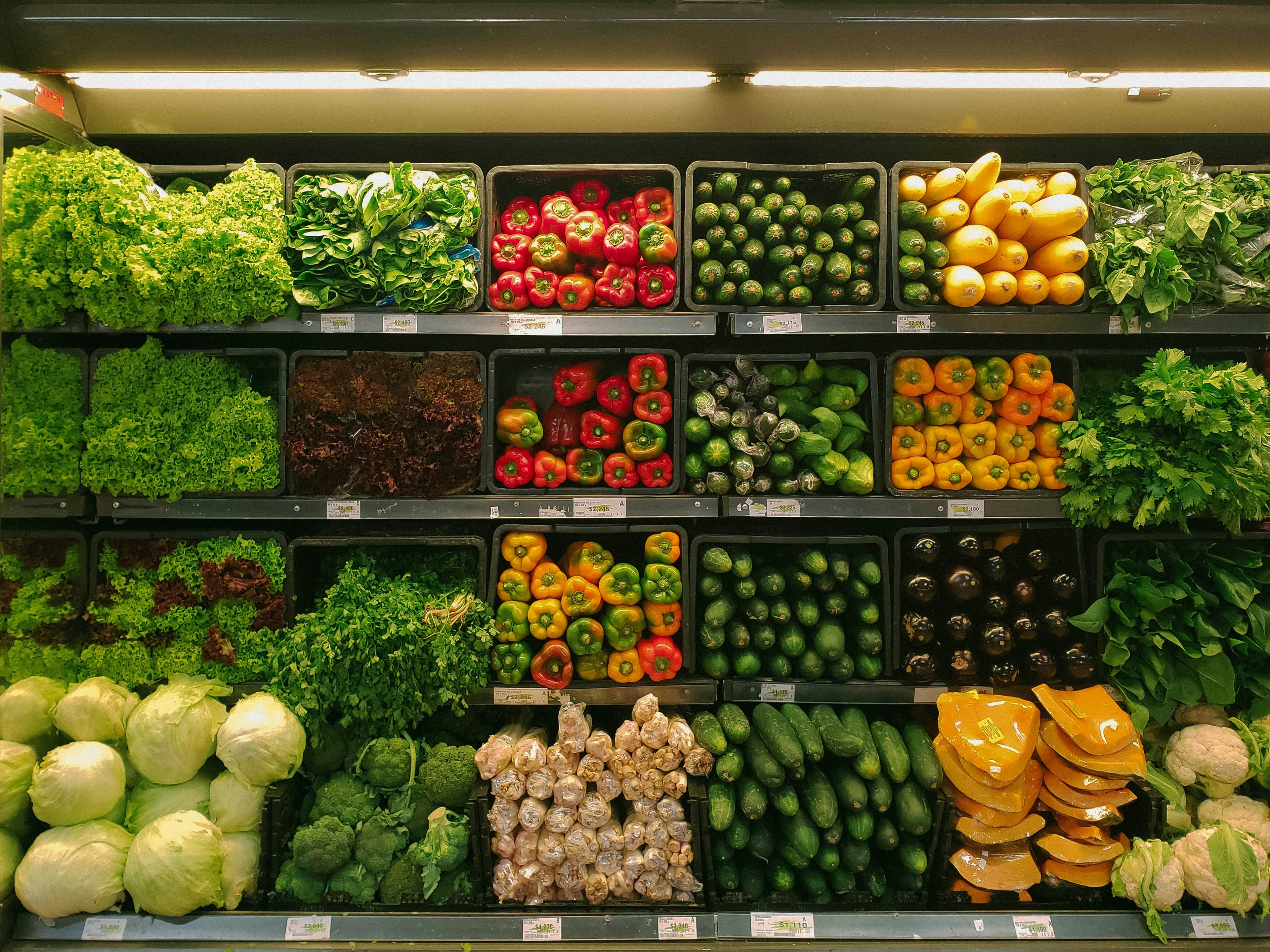
That means every item needs a category: fresh produce, meat and seafood, dairy and chilled, bakery, pantry and baking, pasta and grains, condiments and sauces, frozen. It sounds trivial until you hit the ambiguous ones. Is coconut milk pantry or chilled? Is halloumi dairy? Is a jar of roasted capsicum produce or condiments? The answer depends on how supermarkets actually shelve things, which is knowledge about the world rather than logic you can write down as rules.
This is the part where a shop genuinely gets faster, and it's the least glamorous thing on the list. Our guide to the automatic grocery list goes further into how the list assembles itself from a plan.
Naming things the way the shop does
Here's a subtlety that separates a list you'd actually shop from a list that's technically correct. Recipes name ingredients the way cooks talk. Supermarkets name them the way products are labelled.
A recipe says "beef mince" or "ground beef" depending on where it was written. It says "capsicum" or "bell pepper". "Prawns" or "shrimp". "Cornflour" or "cornstarch". "Spring onion" or "green onion". If you're standing in an Australian supermarket, one of each pair is the word on the shelf and the other is a small moment of translation you have to do yourself, every time, for every item.
Normalising all of that to the local shelf name — while keeping the distinctions that actually matter, so "smoked paprika" doesn't quietly become "paprika" and ruin dinner — is exactly the kind of judgement AI is well suited to and rules are bad at.
Subtracting what you already own
The last step is the one that saves the most money and gets talked about the least: not buying things you already have.
Every week's recipes call for olive oil, salt, plain flour, soy sauce, the same six spices. You own all of it. A list that includes them is a list you have to mentally filter in the shop, which means you'll either buy a fourth bottle of sesame oil or start ignoring the list. Both are bad outcomes.
Once the app knows what's in your pantry, those lines can simply not appear. It's less impressive than anything else in this article and it's probably the single biggest reason a generated list beats one you write yourself.
What AI grocery lists still get wrong
Three honest limitations, having used one for months.
Quantities are approximate. A recipe wanting "2 cups of baby spinach" becomes "spinach" on your list, and how much you buy is still your call. Anything that claims to tell you exactly how many grams to purchase is guessing about bag sizes.
It doesn't know your kitchen. The half-bunch of coriander already in the fridge, the leftover cream from Sunday — unless you've told it, it'll put them on the list. Pantry tracking helps for staples; it can't help with the odds and ends.
Weird recipes produce weird lines. Ingredients written as prose ("a splash of whatever white wine is open"), or sub-recipes nested inside recipes, can come through oddly. Less often than you'd expect, but it happens, which is why any list worth using stays fully editable.
Do you actually need AI, or just a good generator?
A fair question. If your recipes are all from one tidy site and you cook the same eight things, a plain grocery list generator will do the job — the format is predictable enough that rules cope.
The AI part earns its keep when your recipes come from everywhere: a food blog, a US site, a scanned cookbook page, something your mum sent. That's when the parsing, the merging and the naming stop being predictable and start needing judgement. Most couples' libraries look like the second case within about a month, which is why we built it that way. If you're comparing options, our round-up of the best grocery list apps covers the non-AI ones fairly.
How it works in slrp
In slrp, the list is a by-product of planning rather than a thing you maintain. You add recipes to your week; the grocery list is already written by the time you've finished — parsed, merged, converted, named the way your supermarket names things, sorted by aisle, and with your pantry staples stripped out.
Because slrp is built for two, it's one shared list rather than two copies to reconcile. One of you ticks off limes in the shop and the other sees it strike through immediately, which is the whole point of setting up a shared grocery list properly. Add "we're out of eggs" by hand and it sits alongside everything the recipes generated.
None of that costs anything — the grocery list, the meal plan, the recipe library and the pantry are free, for both of you. The AI helpers that plan the week for you are the paid part; the list that falls out of a plan you made is not.
Where to start
If you want to test whether this actually saves you time, don't start with the list — start with the week. Save four recipes you genuinely intend to cook, put them on a plan, and look at what comes out the other end. The list is only as good as the recipes feeding it, which is the same lesson we took from a month of letting an AI plan our meals: the tooling amplifies what you give it.
Then do one shop with it. You'll know within one trip whether an aisle-sorted, pantry-aware, already-merged list is worth having — it's the sort of thing that either quietly removes a chore or doesn't, and no amount of reading about it settles the question.